The BPM/Agent Stack
Execution governance for AI agent architectures
Process models. Decision tables. Activity attributes. Structured exception handling. The proven discipline of Business Process Management — applied to the execution governance gap in AI agent deployment.
Every AI agent framework solves mechanism: how models access tools, how agents coordinate, how state persists. None solves execution governance: who is responsible for each step, what structured logic governs decisions, what happens when things go wrong, what constraints apply at each activity, and what audit trail exists.
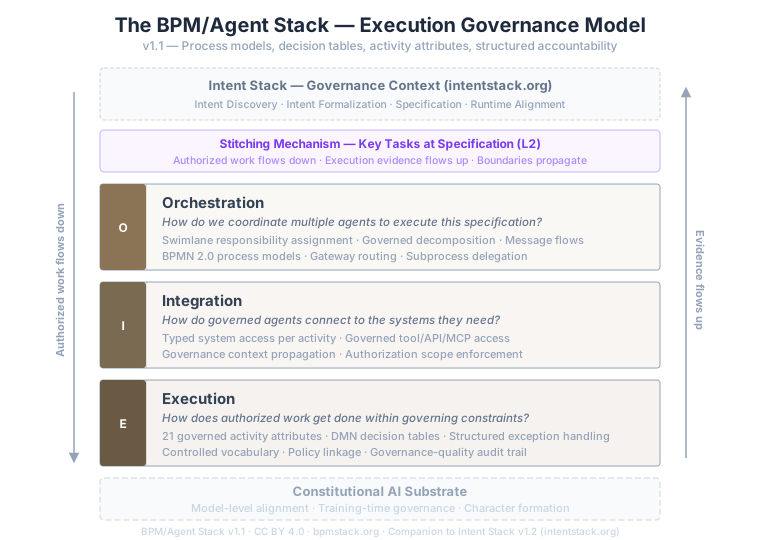
The BPM/Agent Stack covers execution governance — orchestration, integration, and execution of authorized work. The companion Intent Stack specification covers governance context — from intent discovery through runtime alignment. Together, the two specifications address seven governance concerns across the full governance lifecycle.
Who this is for
- CISOs & security architects — governing AI agents performing security operations with SP 800-53 compliant execution infrastructure
- BPM & governance practitioners — extending proven process, decision, and case management patterns to AI agent execution
- AI agent developers — adding structured accountability, deterministic decision separation, and governed exception handling to agent architectures
- Enterprise architects — deploying AI agents at scale with the same execution governance rigor applied to human workflows
Public Draft Specification, Version 1.1 — April 1, 2026. Grounded in BPMN 2.0, DMN 1.0, and the ABPMP BPM CBOK. Licensed under CC BY 4.0.